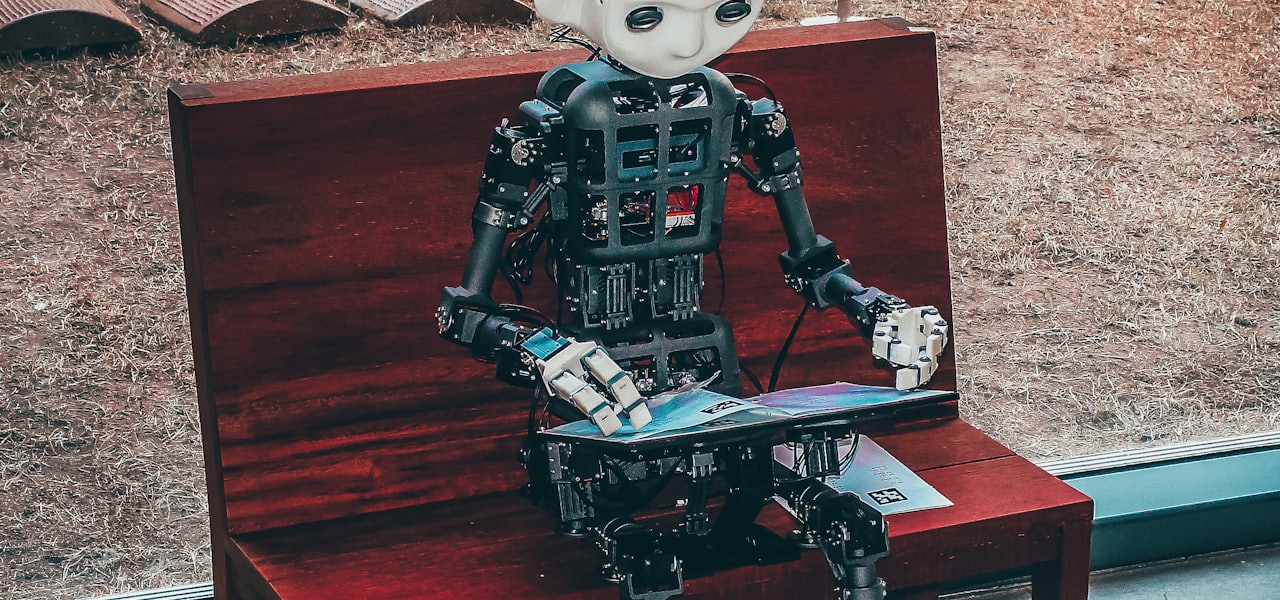
Trying to pick the best AI text-to-video tool? An AI text-to-video tool is software that uses machine learning to help you get more done — it scales effortlessly from a single task to thousands. The best picks balance beginner-friendly simplicity with the depth power users need, and they ship updates often. Whether you are a beginner or a pro, the right AI text-to-video tool slots into your workflow and pays for itself fast. This guide breaks down the top picks, their pros and cons, and who each one is best for.
Scene text
Scene text is text that appears in an image captured by a camera in an outdoor environment. The detection and recognition of scene text from camera captured images are computer vision tasks which became important after smart phones with good cameras became ubiquitous. The text in scene images varies in shape, font, colour and position. The recognition of scene text is further complicated sometimes by non-uniform illumination and focus. To improve scene text recognition, the International Conference on Document Analysis and Recognition (ICDAR) conducts a robust reading competition once in two years. The competition was held in 2003, 2005 and during every ICDAR conference. International association for pattern recognition (IAPR) has created a list of datasets as Reading systems. == Text detection == Text detection is the process of detecting the text present in the image, followed by surrounding it with a rectangular bounding box. Text detection can be carried out using image based techniques or frequency based techniques. In image based techniques, an image is segmented into multiple segments. Each segment is a connected component of pixels with similar characteristics. The statistical features of connected components are utilised to group them and form the text. Machine learning approaches such as support vector machine and convolutional neural networks are used to classify the components into text and non-text. In frequency based techniques, discrete Fourier transform (DFT) or discrete wavelet transform (DWT) are used to extract the high frequency coefficients. It is assumed that the text present in an image has high frequency components and selecting only the high frequency coefficients filters the text from the non-text regions in an image. == Word recognition == In word recognition, the text is assumed to be already detected and located and the rectangular bounding box containing the text is available. The word present in the bounding box needs to be recognized. The methods available to perform word recognition can be broadly classified into top-down and bottom-up approaches. In the top-down approaches, a set of words from a dictionary is used to identify which word suits the given image. Images are not segmented in most of these methods. Hence, the top-down approach is sometimes referred as segmentation free recognition. In the bottom-up approaches, the image is segmented into multiple components and the segmented image is passed through a recognition engine. Either an off the shelf Optical character recognition (OCR) engine or a custom-trained one is used to recognise the text.
Case-based reasoning
Case-based reasoning (CBR), broadly construed, is the process of solving new problems based on the solutions of similar past problems. In everyday life, an auto mechanic who fixes an engine by recalling another car that exhibited similar symptoms is using case-based reasoning. A lawyer who advocates a particular outcome in a trial based on legal precedents or a judge who creates case law is using case-based reasoning. So, too, an engineer copying working elements of nature (practicing biomimicry) is treating nature as a database of solutions to problems. Case-based reasoning is a prominent type of analogy solution making. It has been argued that case-based reasoning is not only a powerful method for computer reasoning, but also a pervasive behavior in everyday human problem solving; or, more radically, that all reasoning is based on past cases personally experienced. This view is related to prototype theory, which is most deeply explored in cognitive science. == Process == Case-based reasoning has been formalized for purposes of computer reasoning as a four-step process: Retrieve: Given a target problem, retrieve cases relevant to solving it from memory. A case consists of a problem, its solution, and, typically, annotations about how the solution was derived. For example, suppose Fred wants to prepare blueberry pancakes. Being a novice cook, the most relevant experience he can recall is one in which he successfully made plain pancakes. The procedure he followed for making the plain pancakes, together with justifications for decisions made along the way, constitutes Fred's retrieved case. Reuse: Map the solution from the previous case to the target problem. This may involve adapting the solution as needed to fit the new situation. In the pancake example, Fred must adapt his retrieved solution to include the addition of blueberries. Revise: Having mapped the previous solution to the target situation, test the new solution in the real world (or a simulation) and, if necessary, revise. Suppose Fred adapted his pancake solution by adding blueberries to the batter. After mixing, he discovers that the batter has turned blue – an undesired effect. This suggests the following revision: delay the addition of blueberries until after the batter has been ladled into the pan. Retain: After the solution has been successfully adapted to the target problem, store the resulting experience as a new case in memory. Fred, accordingly, records his new-found procedure for making blueberry pancakes, thereby enriching his set of stored experiences, and better preparing him for future pancake-making demands. == Comparison to other methods == At first glance, CBR may seem similar to the rule induction algorithms of machine learning. Like a rule-induction algorithm, CBR starts with a set of cases or training examples; it forms generalizations of these examples, albeit implicit ones, by identifying commonalities between a retrieved case and the target problem. If for instance a procedure for plain pancakes is mapped to blueberry pancakes, a decision is made to use the same basic batter and frying method, thus implicitly generalizing the set of situations under which the batter and frying method can be used. The key difference, however, between the implicit generalization in CBR and the generalization in rule induction lies in when the generalization is made. A rule-induction algorithm draws its generalizations from a set of training examples before the target problem is even known; that is, it performs eager generalization. For instance, if a rule-induction algorithm were given recipes for plain pancakes, Dutch apple pancakes, and banana pancakes as its training examples, it would have to derive, at training time, a set of general rules for making all types of pancakes. It would not be until testing time that it would be given, say, the task of cooking blueberry pancakes. The difficulty for the rule-induction algorithm is in anticipating the different directions in which it should attempt to generalize its training examples. This is in contrast to CBR, which delays (implicit) generalization of its cases until testing time – a strategy of lazy generalization. In the pancake example, CBR has already been given the target problem of cooking blueberry pancakes; thus it can generalize its cases exactly as needed to cover this situation. CBR therefore tends to be a good approach for rich, complex domains in which there are myriad ways to generalize a case. In law, there is often explicit delegation of CBR to courts, recognizing the limits of rule based reasons: limiting delay, limited knowledge of future context, limit of negotiated agreement, etc. While CBR in law and cognitively inspired CBR have long been associated, the former is more clearly an interpolation of rule based reasoning, and judgment, while the latter is more closely tied to recall and process adaptation. The difference is clear in their attitude toward error and appellate review. Another name for case-based reasoning in problem solving is symptomatic strategies. It does require à priori domain knowledge that is gleaned from past experience which established connections between symptoms and causes. This knowledge is referred to as shallow, compiled, evidential, history-based as well as case-based knowledge. This is the strategy most associated with diagnosis by experts. Diagnosis of a problem transpires as a rapid recognition process in which symptoms evoke appropriate situation categories. An expert knows the cause by virtue of having previously encountered similar cases. Case-based reasoning is the most powerful strategy, and that used most commonly. However, the strategy won't work independently with truly novel problems, or where deeper understanding of whatever is taking place is sought. An alternative approach to problem solving is the topographic strategy which falls into the category of deep reasoning. With deep reasoning, in-depth knowledge of a system is used. Topography in this context means a description or an analysis of a structured entity, showing the relations among its elements. Also known as reasoning from first principles, deep reasoning is applied to novel faults when experience-based approaches aren't viable. The topographic strategy is therefore linked to à priori domain knowledge that is developed from a more a fundamental understanding of a system, possibly using first-principles knowledge. Such knowledge is referred to as deep, causal or model-based knowledge. Hoc and Carlier noted that symptomatic approaches may need to be supported by topographic approaches because symptoms can be defined in diverse terms. The converse is also true – shallow reasoning can be used abductively to generate causal hypotheses, and deductively to evaluate those hypotheses, in a topographical search. == Criticism == Critics of CBR argue that it is an approach that accepts anecdotal evidence as its main operating principle. Without statistically relevant data for backing and implicit generalization, there is no guarantee that the generalization is correct. However, all inductive reasoning where data is too scarce for statistical relevance is inherently based on anecdotal evidence. == History == CBR traces its roots to the work of Roger Schank and his students at Yale University in the early 1980s. Schank's model of dynamic memory was the basis for the earliest CBR systems: Janet Kolodner's CYRUS and Michael Lebowitz's IPP. Other schools of CBR and closely allied fields emerged in the 1980s, which directed at topics such as legal reasoning, memory-based reasoning (a way of reasoning from examples on massively parallel machines), and combinations of CBR with other reasoning methods. In the 1990s, interest in CBR grew internationally, as evidenced by the establishment of an International Conference on Case-Based Reasoning in 1995, as well as European, German, British, Italian, and other CBR workshops. CBR technology has resulted in the deployment of a number of successful systems, the earliest being Lockheed's CLAVIER, a system for laying out composite parts to be baked in an industrial convection oven. CBR has been used extensively in applications such as the Compaq SMART system and has found a major application area in the health sciences, as well as in structural safety management. There is recent work that develops CBR within a statistical framework and formalizes case-based inference as a specific type of probabilistic inference. Thus, it becomes possible to produce case-based predictions equipped with a certain level of confidence. One description of the difference between CBR and induction from instances is that statistical inference aims to find what tends to make cases similar while CBR aims to encode what suffices to claim similarly.
Belief–desire–intention model
For popular psychology, the belief–desire–intention (BDI) model of human practical reasoning was developed by Michael Bratman as a way of explaining future-directed intention. BDI is fundamentally reliant on folk psychology (the 'theory theory'), which is the notion that our mental models of the world are theories. It was used as a basis for developing the belief–desire–intention software model. == Applications == BDI was part of the inspiration behind the BDI software architecture, which Bratman was also involved in developing. Here, the notion of intention was seen as a way of limiting time spent on deliberating about what to do, by eliminating choices inconsistent with current intentions. BDI has also aroused some interest in psychology. BDI formed the basis for a computational model of childlike reasoning CRIBB.
Hello World: How to be Human in the Age of the Machine
Hello World: How to Be Human in the Age of the Machine (also titled Hello World: Being Human in the Age of Algorithms) is a book on the growing influence of algorithms and artificial intelligence (AI) on human life, authored by mathematician and science communicator Hannah Fry. The book examines how algorithms are increasingly shaping decisions in critical areas such as healthcare, transportation, justice, finance, and the arts. == Overview == Fry uses real-world examples, such as driverless cars and predictive policing, to illustrate her points. She emphasizes that algorithms are not inherently objective; they reflect biases embedded in their design and data inputs. While acknowledging their potential to improve efficiency and accuracy, Fry cautions against over-reliance on machines without human judgment. Fry explores moral questions surrounding algorithmic decision-making, such as whether machines can replace human empathy in critical situations. She advocates for greater scrutiny of algorithms to ensure fairness and avoid harmful biases. The book proposes a "cyborg future", where humans work alongside algorithms to enhance decision-making while retaining ultimate control. == Reception == Hello World has been praised for its clarity, engaging storytelling, and balanced perspective. Critics have highlighted Fry's ability to make complex topics accessible to general audiences while raising important questions about technology's impact on society. The book was shortlisted for awards such as the 2018 Baillie Gifford Prize and the Royal Society Science Book Prize.
Cloud Security Alliance
Cloud Security Alliance (CSA) is a not-for-profit organization with the mission to "promote the use of best practices for providing security assurance within cloud computing, artificial intelligence and to provide education on the uses of cloud computing to help secure all other forms of computing." The CSA has over 80,000 individual members worldwide. The CSA gained significant reputability in 2011 when the American Presidential Administration selected the CSA Summit as the venue for announcing the federal government’s cloud computing strategy. == History == The CSA was formed in December 2008 as a coalition by individuals who saw the need to provide objective enterprise user guidance on the adoption and use of cloud computing. Its initial work product, Security Guidance for Critical Areas of Focus in Cloud Computing, was put together in a Wiki-style by dozens of volunteers. In 2014, the Chairman of the Board of the CSA was Dave Cullinane, VP of Global Security and Privacy for Catalina Marketing, St. Petersburg, Florida, and former CISO for eBay. Cullinane has said, "If you have an application exposed to the Internet that will allow people to make money, it will be probed." == Profile == In 2009, the Cloud Security Alliance incorporated in Nevada as a Corporation and achieved US Federal 501(c)6 non-profit status. It is registered as a Foreign Non-Profit Corporation in Washington. == Policy maker support == The CSA works to support a number of global policy makers in their focus on cloud security initiatives including the National Institute of Standards and Technology (NIST), European Commission, Singapore Government, and other data protection authorities. In March 2012, the CSA was selected to partner with three of Europe’s largest research centers (CERN, EMBL and ESA) to launch Helix Nebula – The Science Cloud. == Size == The Cloud Security Alliance employs roughly sixty full-time and contract staff worldwide. It has several thousand active volunteers participating in research, working groups and chapters at any time. == Membership == According to CSA, they are a member-driven organization, chartered with promoting the use of best practices for providing security assurance within Cloud Computing, and providing education on the uses of Cloud Computing to help secure all other forms of computing. === Individuals === Individuals who are interested in cloud computing and have experience to assist in making it more secure receive a complimentary individual membership based on a minimum level of participation. === Chapters === The Cloud Security Alliance has a network of chapters worldwide. Chapters are separate legal entities from the Cloud Security Alliance, but operate within guidelines set down by the Cloud Security Alliance In the United States, Chapters may elect to benefit from the non-profit tax shield that the Cloud Security Alliance has. Chapters are encouraged to hold local meetings and participate in areas of research. Chapter activities are coordinated by the Cloud Security Alliance worldwide. === International scope === There are separate legal entities in Europe and Asia Pacific, called Cloud Security Alliance (Europe), a Scottish company in the United Kingdom, and Cloud Security Alliance Asia Pacific Ltd, in Singapore. Each legal entity is responsible for overseeing all Cloud Security Alliance-related activities in their respective regions. These legal entities operate under an agreement with Cloud Security Alliance that give it oversight power and have separate Boards of Directors. Both are companies Limited By Guarantee. The Managing Directors of each are members of the Executive Team of Cloud Security Alliance. == Areas of research == The Cloud Security Alliance has 25+ active working groups. Key areas of research include cloud standards, certification, education and training, guidance and tools, global reach, and driving innovation. Security Guidance for Critical Areas of Focus in Cloud Computing. Foundational best practices for securing cloud computing. Top Threats to Cloud Computing. Helps organizations make educated risk management decisions regarding their cloud adoption strategies. GRC (Governance, Risk and Compliance) Stack. A toolkit for key stakeholders to instrument and assess clouds against industry established best practices, standards and critical compliance requirements. Cloud Controls Matrix (CCM). Security controls framework for cloud provider and cloud consumers. CloudTrust Protocol. The mechanism by which cloud service consumers ask for and receive information about the elements of transparency as applied to cloud service providers. Consensus Assessments Initiative Research. Tools and processes to perform consistent measurements of cloud providers. Software Defined Perimeter. A proposed security framework that can be deployed to protect application infrastructure from network-based attacks. It will incorporate standards from organizations such as OASIS and NIST and security concepts from organizations like the U.S. DoD into an integrated framework. == Working groups and initiatives == Mobile Working Group Big Data Working Group Security as a Service Working Group Trusted Cloud Initiative CloudAudit CloudCERT CloudSIRT Cloud Metrics Security, Trust and Assurance Registry (STAR) Cloud Data Governance Turbot (business) Blockchain/Distributed Ledger
Wadhwani Institute for Artificial Intelligence
Wadhwani AI, based in Mumbai, Maharashtra, is an independent, non-profit institute. Founded in 2018, it is dedicated to developing Artificial intelligence solutions for social good. Their mission is to build AI-based innovations and solutions for underserved communities in developing countries, for a wide range of domains including agriculture, education, financial inclusion, healthcare, and infrastructure. == History and funding == The institute was founded with a $30 million philanthropic effort by the Wadhwani brothers, Romesh Wadhwani and Sunil Wadhwani. The institute was inaugurated and dedicated to the nation by Narendra Modi, the 14th Prime Minister of India. In 2019, the institute received a $2 million grant from Google.org to create technologies to help reduce crop losses in cotton farming, through integrated pest management. The United States Agency for International Development awarded $2 million to the institute in 2020 to develop tools, using mathematical modeling techniques and digital technologies such as artificial intelligence and machine learning, to forecast COVID-19 disease patterns, estimate resources needed, and plan interventions. == Collaboration == With assistance from Google, the Ministry of Agriculture and Farmers' Welfare and the Wadhwani AI developed Krishi 24/7, the first AI-powered automated agricultural news monitoring and analysis tool. Through better decision-making, Krishi 24/7 will support the identification of valuable news, provide timely notifications, and respond quickly to safeguard farmers' interests and advance sustainable agricultural growth. The application converts news articles into English after scanning them in several languages. It ensures that the ministry is informed in a timely manner about pertinent occurrences that are published online by extracting key information from news items, including the headline, crop name, event type, date, location, severity, summary, and source link. The National Center for Disease Control has effectively implemented a comparable automated surveillance and analysis tool for disease outbreaks.